Six to twelve months. That's the real service life of a 12.75x21x4 air filter in a typical home, not the 90 days every big-box shelf-tag quotes. After more than a decade of making filters at our plants in Alabama, Florida, Pennsylvania, and Utah, we watch homeowners miss that window in both directions. Some replace too early and burn through money for no benefit. Others wait far too long and choke their HVAC. Even a reasonable change interval guide written for a common 1-inch size gets the 4-inch answer wrong. Here's what actually governs the number on your filter, why the 90-day rule belongs in the trash, and how to stop guessing.
TL;DR Quick Answers
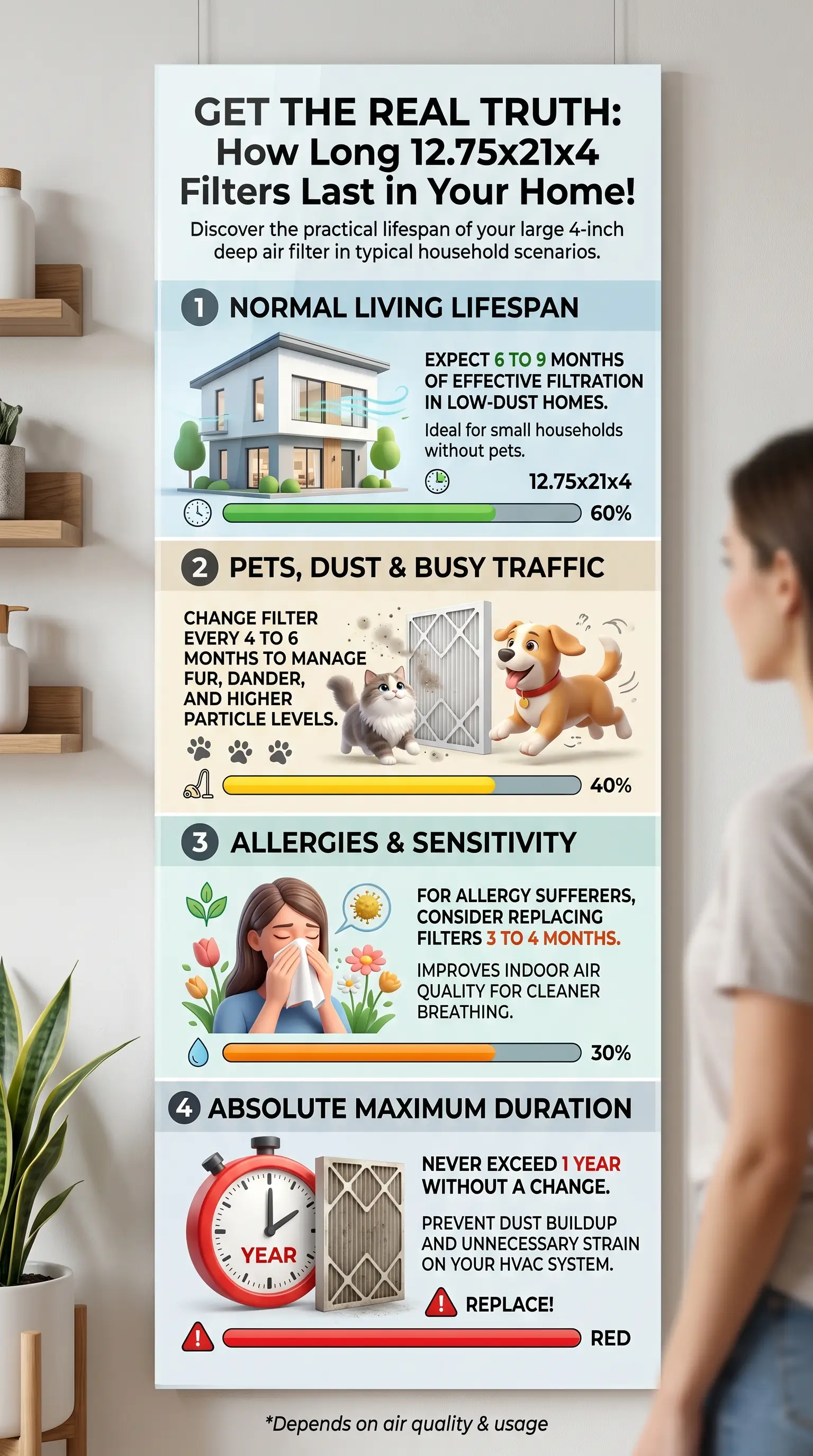
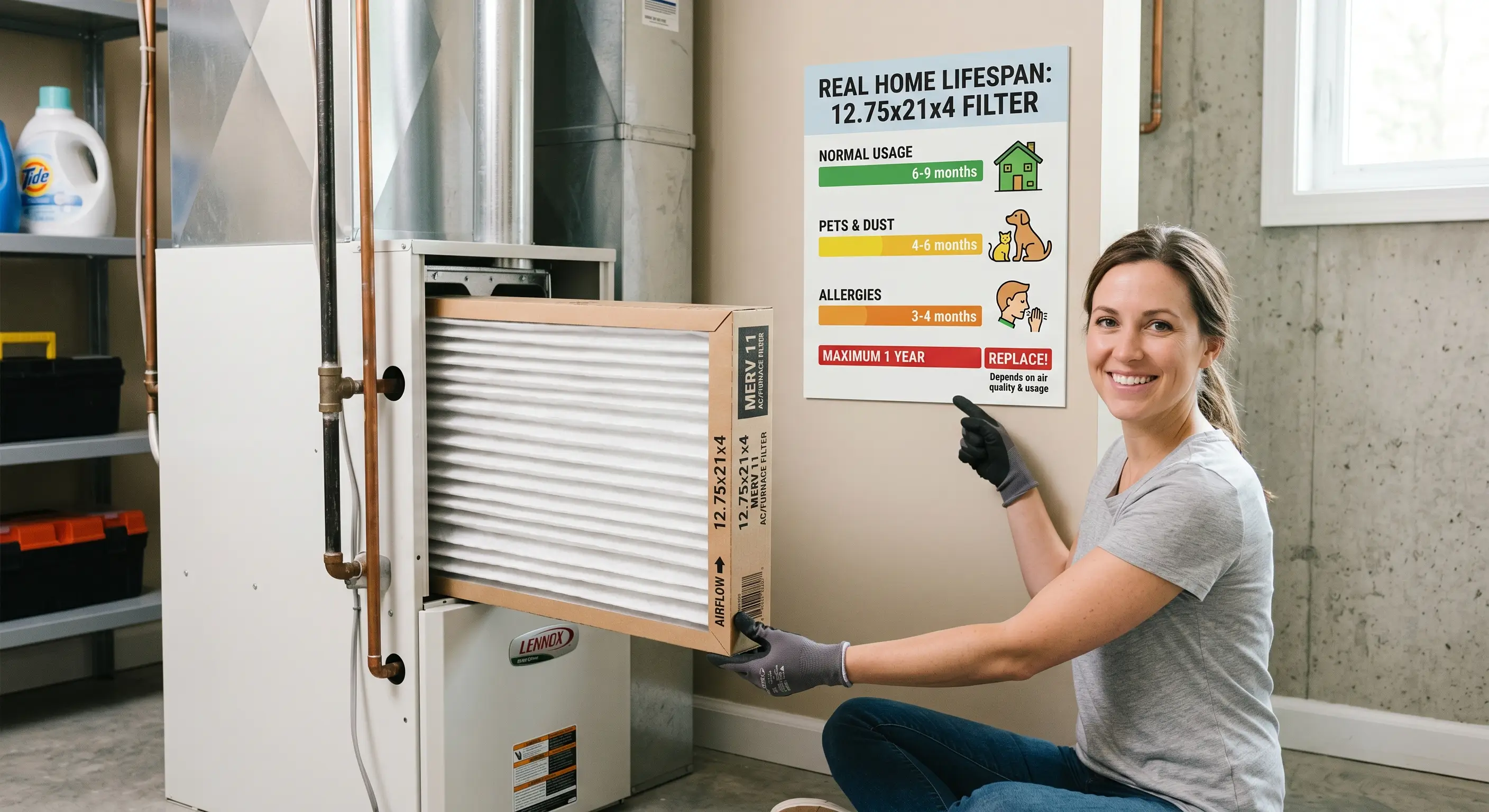
Typical lifespan: 6 to 12 months in average homes. Pets and allergies pull that down to 4 to 6.
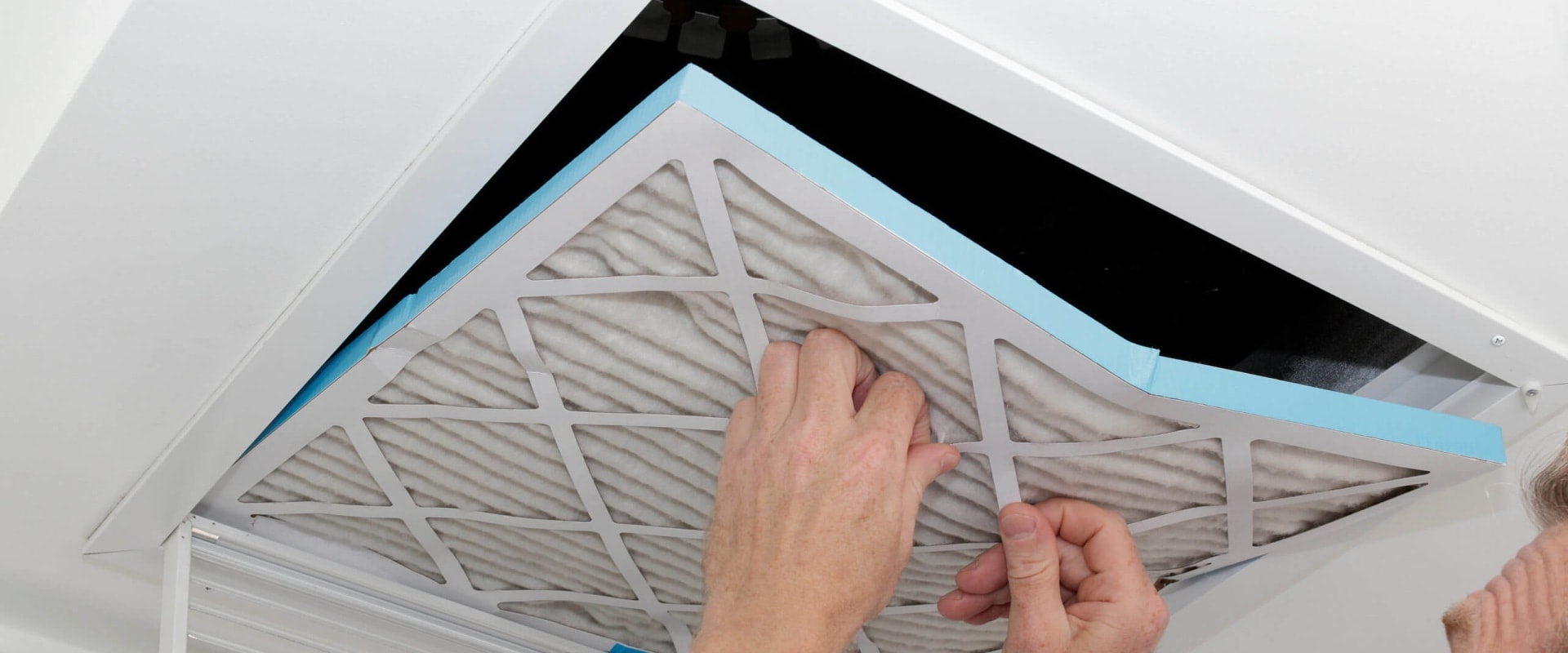
Rule of thumb: inspect monthly, replace when the filter looks loaded.
Never substitute a 13x21x4. The 0.25-inch gap lets unfiltered air slip past the frame.
A 4-inch filter holds far more dust than a 1-inch before airflow suffers.
A clean filter can cut HVAC energy use by up to 15%.
Top Takeaways
The 90-day rule was written for cheap 1-inch panel filters. It does not apply to 4-inch deep-pleat media.
The .75-inch dimension signals a custom OEM slot. A rounded-up 13x21x4 will not seal, and the gap damages your coil over time.
Six variables decide lifespan: MERV rating, pets, allergies, outdoor air quality, HVAC runtime, and indoor activities like cooking, candles, or smoking.
A dirty filter raises your energy bill and shortens the life of your blower motor, coil, and compressor.
Monthly visual inspection beats any calendar rule, whether you run a 1-inch panel, a 4-inch deep pleat, or even larger 5-inch deep options.
Start with the physics. A 4-inch deep-pleat filter carries several times the pleat surface area of a 1-inch panel, so it holds more dust before airflow suffers. Every deep-pleat air filter captures particles the same way, and the filter fundamentals don't change across residential sizes. Your HVAC pushes conditioned air through tight pleats that grab dust, dander, pollen, and combustion particles before any of it reaches your lungs.
The size itself explains why it's rare. That .75-inch fraction points to a custom OEM slot, usually on an older or premium HVAC cabinet. You won't find it next to the standard 1-inch filters at a big-box store. You have to order the exact size. Round up to a 13x21x4 and you create a 0.25-inch gap along the frame. Dirty air slips around the filter, coats your evaporator coil, and grinds down the system from the inside. Exact fit is not optional.
Six things pull the replacement window one way or the other. Higher MERV ratings trap smaller particles and shorten filter life. Each pet in the house subtracts months. Allergies or asthma in the household push replacement earlier. Outdoor air quality plays a role, and wildfire smoke, heavy pollen, and urban pollution load a filter fast. HVAC runtime and home size matter too, because multi-story systems cycle longer and load filters faster than single-story layouts. Indoor habits like cooking, candles, and smoking add their own particles, so if odors drive your decision, a carbon odor control filter helps with smells but trades some service life for that capture. In our experience, a two-pet home with one mild allergy sufferer usually hits replacement around 4 to 6 months. A sealed, pet-free townhouse in a mild climate can honestly push past 12 months.
You can stretch service life with habits that reduce the load hitting the filter. Keep return grilles clean. Vacuum registers monthly. Seal duct leaks. Run bathroom fans during showers. Stop burning candles near the returns. Independent deep-pleat reviews confirm what we see in our own data: 4-inch and thicker media outlasts thinner options in matched conditions. When it's time to replace, order the correct size. Stock up on 12.75x21x4 air filters instead of forcing a standard size into a non-standard slot.
Any reliable furnace filter guide covers the basics. The judgment calls come from field experience. Our founder has opened returned filters and listened to real-home feedback for more than a decade, and he put it bluntly:
“After a decade-plus making filters at our Alabama, Florida, Pennsylvania, and Utah plants, the biggest mistake we see with 12.75x21x4 filters isn't leaving them in too long. It's buying the wrong size on purpose. Run the exact size, inspect it monthly, and a 4-inch filter in a typical home really does reach the 12-month mark.”
Seven Essential Resources
For the Prudent Protector who wants to verify the science, here are seven sources we trust. Each one lives on a different domain, from federal agencies to national health organizations to professional engineering bodies. You're getting independent information, not marketing.
U.S. Environmental Protection Agency — Guide to Air Cleaners in the Home. https://www.epa.gov/indoor-air-quality-iaq/guide-air-cleaners-home — The EPA's consumer guide on choosing, using, and maintaining residential HVAC filters.
ENERGY STAR — Heat and Cool Efficiently. https://www.energystar.gov/saveathome/heating-cooling — Federal program guidance on filter checks, HVAC tune-ups, and efficiency savings.
U.S. Department of Energy — Air Conditioner Maintenance. https://www.energy.gov/energysaver/air-conditioner-maintenance — DOE tips on filter replacement frequency and coil care.
American Lung Association — Clean Air Indoors. https://www.lung.org/clean-air/indoor-air — Health-focused view of indoor air pollutants and how they affect the lungs.
ASHRAE — Standard 52.2 (MERV Test Method). https://www.ashrae.org/File%20Library/Technical%20Resources/COVID-19/52_2_2017_COVID-19_20200401.pdf — The engineering standard that defines how MERV ratings get tested and reported.
Asthma and Allergy Foundation of America — Certified Asthma & Allergy Friendly Program. https://aafa.org/programs/certified-asthma-allergy-friendly/ — AAFA's vetted list of products and filters tested for allergen and irritant reduction.
AirNow.gov — Real-Time Local Air Quality. https://www.airnow.gov — Interagency air-quality tracker you can use to match outdoor conditions to filter load.
Three Statistics
Three numbers come up every time a customer asks whether filter discipline is really worth the trouble. All three come from primary federal sources.
Indoor air runs 2 to 5 times more polluted than outdoor air in a typical home, and occasionally more than 100 times higher for specific pollutants (U.S. Environmental Protection Agency). Source: EPA — The Inside Story: A Guide to Indoor Air Quality
Swapping a clogged filter for a clean one can cut HVAC energy use by 5% to 15% (U.S. Department of Energy). That hits your utility bill directly. Source: U.S. Department of Energy — Air Conditioner Maintenance
Heating and cooling use nearly half of the energy in a typical U.S. home (ENERGY STAR), which is why filter condition moves both comfort and cost. Source: ENERGY STAR — Heat and Cool Efficiently
Final Thoughts and Opinion
Our honest take after a decade of opening returned filters and listening to customers: the 90-day rule is the laziest piece of advice in HVAC. It treats every home like the same home. Smarter replacement schedule tips adjust for your actual conditions. A 4-inch 12.75x21x4 filter isn't a 1-inch panel, and the life cycle isn't the same either. Telling every homeowner to change every three months wastes money in a clean, sealed house and starves the HVAC in a pet-heavy, allergy-prone one. If you want the engineering deeper, broader HVAC filter resources break down media types, pleat counts, and pressure drop.
The right answer is to inspect monthly and replace when the filter looks loaded or you notice airflow drop. Five minutes. If that earns you one extra month between replacements across the year, you've saved real money. If it keeps you out of a restricted-airflow coil freeze, one of the AC filter basics every homeowner should know, you've saved hundreds. Your filter is more than a consumable. It's the first line of defense for your family and the most expensive piece of equipment in your house.
Frequently Asked Questions
Is 12.75x21x4 the same as 13x21x4?
No. That quarter-inch difference creates bypass air. Unfiltered particles slip around the frame, coat your coil, and cycle back into your living space. Always match the size printed on your old filter or on your OEM cabinet label. An exact-fit filter is the only safe answer.
Can I wash and reuse a 12.75x21x4 pleated filter?
No. Wet pleated media loses efficiency and warps out of shape. Washing a used disposable also releases the particles you just trapped back into your air. Manufacturers design pleated filters for replacement, not cleaning. If you need a reusable option, look at dedicated washable filter options built for that cycle.
What MERV rating is best for a 12.75x21x4 filter?
For most homes, MERV 8 to MERV 11 balances filtration and airflow well. Allergy or asthma households often step up to a MERV 13 option. Check your system's specs before going higher, because some older blowers can't handle the extra pressure drop.
How do I know my system takes a 12.75x21x4?
Pull out your current filter and read the size printed on the cardboard frame. If the print has worn off, check your HVAC cabinet's OEM paperwork. Don't guess from the slot opening. Measure the actual filter. Once you've confirmed the size, skip third-party marketplace listings that don't print clear dimensions, and order from sources that spell them out.
Is it safe to run my HVAC without a filter while I wait for a replacement?
No. Without a filter, dust, pet hair, and debris land directly on your evaporator coil and blower motor. Even one week of filterless operation can force an expensive coil cleaning. Always keep a spare on the shelf.
Stop guessing, and stop forcing the wrong size into the right slot.
Order the exact size your system actually needs. Filterbuy makes 12.75x21x4 Air Filters in our U.S. plants and ships them factory-direct to your door. Subscribe to a 6- or 12-month delivery schedule, or buy in bulk for a full year of coverage, and we'll match the cadence your home needs. Tap here to protect your family's air and the biggest piece of equipment in your house.
Learn more about HVAC Care from one of our HVAC solutions branches…
Filterbuy HVAC Solutions - Miami FL - Air Conditioning Service
1300 S Miami Ave Apt 4806 Miami FL 33130
(305) 306-5027
https://maps.app.goo.gl/Ci1vrL596LhvXKU79